How Sensory Play Improves Brain Development in Children

1. How Sensory Play Improves Brain Development in Children

Starting kindergarten is a big step for both children and parents... Read More

How to Prepare your child for kindergarten

2. How to Prepare Your Child for Kindergarten

Starting kindergarten is a big milestone — not just for children, but for parents too... Read More

Separation Anxiety in Toddlers

3. Separation Anxiety in Toddlers - What Parents Should Know

Starting kindergarten is a big step for both children and parents... Read More

1. How Sensory Play Improves Brain Development in Children

When young children play, they are not “just playing” — they are building their brain.

When young children play, they are not “just playing” — they are building their brain.

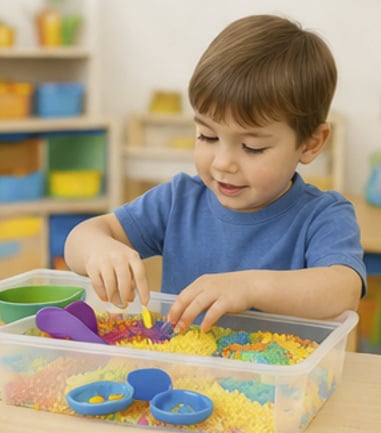
  • Playing with sand, rice, or water
  • Finger painting
  • Climbing, jumping, and balancing
  • Listening to music and rhythm

    These activities may seem simple, but they are doing something incredibly important: building neural connections in the brain.

    How sensory play supports brain development

    During early childhood, the brain develops faster than at any other stage of life.

    Every sensory experience strengthens connections between brain cells. Over time, this leads to:
  • Better memory
  • Stronger problem-solving skills
  • Improved coordination
  • Increased ability to focus

    Children who engage regularly in sensory play often find it easier to adapt, learn, and interact with their environment.

    Emotional and behavioural benefits

    Sensory play is not only about learning — it also supports emotional wellbeing.

    It helps children:
  • Calm down when overwhelmed
  • Manage frustration
  • Feel more in control of their environment

    For example, activities like squeezing, pouring, or repetitive motion can be very soothing for young children.

    Why it matters in kindergarten

    A strong sensory foundation allows children to:

  • Sit and concentrate
  • Follow instructions
  • Participate in group activities

    Without it, children may struggle with attention, behaviour, or emotional regulation.

    Conclusion

    Sensory play is not a luxury — it is essential.

    By giving children opportunities to explore through their senses, we are helping them build the foundations for learning, confidence, and emotional balance.
If you are choosing a kindergarten, read out complete guide Here


If you are choosing a kindergarten, read our complete guide here


2. How to Prepare Your Child for Kindergarten

Starting kindergarten is a big milestone — not just for children, but for parents too.

For many families, this is the first time a child spends extended time away from home. Preparation can make this transition smoother, calmer, and more positive.

Build a predictable routine
Children feel safe when they know what to expect.

Start introducing a consistent routine before kindergarten begins:

Wake up at the same time each day
Eat meals at regular times
Establish a calm bedtime routine

This helps children adjust more easily to the structure of a school day.

Encourage independence
Kindergarten is often a child’s first step toward independence.

You can support this by encouraging small daily tasks:

Putting on shoes
Washing hands
Tidying toys
Eating without assistance

These simple skills build confidence and reduce anxiety when they enter a classroom environment.

Talk about kindergarten positively
Children take emotional cues from their parents.

Talk about kindergarten as:

A safe place
A fun place
A place where they will make friends

Avoid showing anxiety — even if you feel it.

Visit the environment beforehand
If possible, visit the kindergarten before the first day.

This helps your child:

Recognise the space
Meet teachers
Feel familiar and secure

Even one visit can significantly reduce first-day stress.

Expect some emotions
It’s completely normal for children to feel:

Nervous
Excited
Uncertain

Some children may cry at first — this is part of the adjustment process and usually improves quickly.

Conclusion
Preparation is not about perfection — it’s about building confidence.

With routine, reassurance, and support, most children adapt quickly and begin to enjoy their new environment.

If you are choosing a kindergarten, read out complete guide Here

3. Separation Anxiety in Toddlers – What Parents Should Know

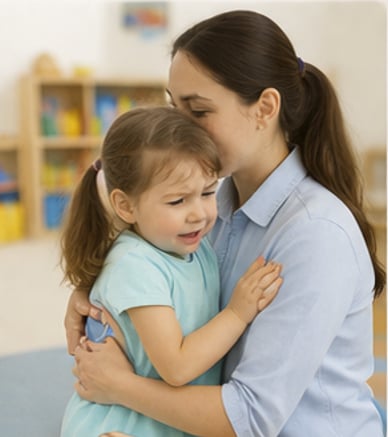
Separation anxiety is one of the most common challenges when a child starts kindergarten.

It can be emotional for both the child and the parent — but it is also a completely normal part of development.

Why separation anxiety happens
Young children form strong attachments to their parents or caregivers.

When they are separated, they may feel:

Unsafe
Uncertain
Afraid of being left behind

This reaction is a natural sign of healthy attachment.

Common signs
Crying when parents leave
Holding tightly onto a parent
Refusing to enter the classroom
Becoming quiet or withdrawn

How parents can help
The way parents handle separation plays a huge role.

Helpful strategies include:

Keeping goodbyes short and calm
Avoiding “sneaking away”
Reassuring the child that you will return
Staying consistent with drop-off routines

What NOT to do
Do not prolong the goodbye
Do not show anxiety
Do not return repeatedly after leaving

These behaviours can increase uncertainty.

How long does it last?

For most children, separation anxiety improves within:
👉 1–3 weeks

As they build trust with teachers and become familiar with the environment, they begin to feel safe.

Conclusion
Separation anxiety is not a problem — it is a phase.

With patience, consistency, and support, children quickly adapt and begin to feel confident and secure.

4. Why Small Class Sizes Matter in Early Childhood Education

When parents choose a kindergarten, they often focus on curriculum, facilities, or location. But one of the most important — and often overlooked — factors is class size.

In early childhood, smaller class sizes are not just a preference. They are a critical factor in how well a child learns, develops emotionally, and builds confidence.

The importance of individual attention
Young children do not learn in the same way adults do. They need:

Guidance
Repetition
Emotional support
Personal interaction

In smaller classes, teachers have the time to truly understand each child:

Their personality
Their strengths
Their challenges

This allows learning to be adapted to the child — not the other way around.

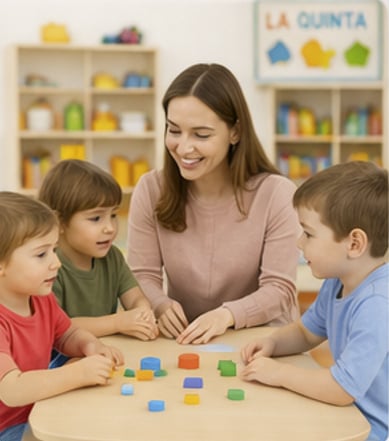
At La Quinta Kindergarten, maintaining small groups (approximately 12–14 children) allows continuous observation and personalised support.

Stronger emotional connections
Children learn best when they feel safe.

In a smaller classroom:

Teachers build stronger bonds with each child
Children feel seen and valued
Trust develops faster

This emotional security leads to:

Better behaviour
Increased participation
Greater willingness to explore and learn

Better social development
It may seem that larger groups offer more social opportunities — but the opposite is often true.

In smaller groups:

Children interact more meaningfully
Teachers can guide social behaviour
Conflicts are addressed more effectively

Children learn:

How to share
How to communicate
How to cooperate

Supporting different learning paces
Every child develops at a different speed.

Some children:

Need more time to process information
Need reassurance
Need encouragement to participate

In large classrooms, these children can easily be overlooked.

In smaller classrooms, they are supported.

The long-term impact
Early childhood is the foundation for everything that follows.

Children who receive:

Individual attention
Emotional support
Structured guidance

are more likely to:

Develop confidence
Enjoy learning
Adapt successfully to primary school

Conclusion
Small class sizes are not just a feature — they are a necessity for quality early education.

They create an environment where children are not just taught, but truly understood.

5. Benefits of Bilingual Education in Early Childhood

Children are naturally wired to learn language.

In fact, the early years are the most powerful time for language development. Introducing a second language during this period does not confuse children — it enhances their cognitive and social abilities in remarkable ways.

How children learn languages naturally
Young children do not “study” language — they absorb it.

Through:

Play
Songs
Interaction
Daily routines

they begin to understand and use multiple languages effortlessly.

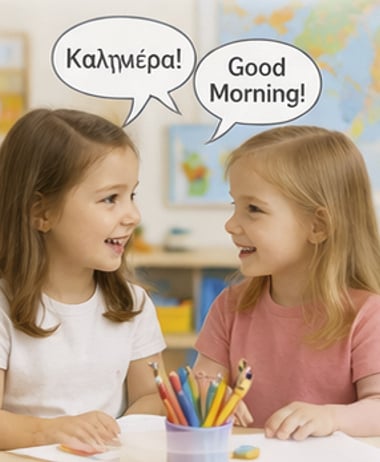
At La Quinta, both Greek and English are integrated into daily activities, allowing children to experience language naturally rather than academically.

Cognitive benefits of bilingualism
Research shows that bilingual children often develop:

Stronger memory
Better problem-solving skills
Greater mental flexibility

They learn to switch between languages, which strengthens the brain’s ability to adapt and think creatively.

Social and emotional advantages
Language is not just about communication — it’s about connection.

Bilingual children:

Communicate more confidently
Adapt to different environments
Develop cultural awareness

They are often more open, curious, and socially engaged.

Improved communication skills
Interestingly, learning two languages can actually improve a child’s understanding of both.

Children become more aware of:

Words
Sounds
Meaning

This awareness strengthens overall communication ability.

Preparing for the future
In today’s world, bilingualism is a major advantage.

It opens doors in:

Education
Travel
Career opportunities

But more importantly, it builds confidence.

Conclusion
Bilingual education is not about pressure — it’s about opportunity.

When introduced naturally and through play, it becomes a powerful tool for cognitive, social, and emotional development.
© 2026 - La Quinta Kindergarten LTD